Saturday, October 28, 2017

Athens vs. Sparta


https://mrcaseyhistory.files.wordpress.com/2013/10/athens-vs-sparta-22j3u26-e1382115102840.jpg


         During Greece’s Classical Age, Greece flourished in wealth, security, and power.  Among the success, only two city-states stood out from the rest: Athens and Sparta.  While both cities were powerful, they were quite different from each other, regarding their social, political, and cultural characteristics.

        Athens social lifestyle was different from that of Sparta.  Athens’ society was based on its land, which was divided into ten tribes.  Under the rule of Cleisthenes, Athens was divided up into three large sections.  Each large section would be divided up into ten units, creating thirty units in total.  Three units would be combined to make one tribe creating ten tribes.  This played into the political system because fifty citizens from each tribe would be selected to participate in the government.  While Athens’ society was based on land distribution, Sparta actually had a social hierarchy.  Sparta’s society had three social rankings: the Spartiates, the Perioikoi, and the Helots.  The Spartiates were the upper class, who consisted of military warriors who were part of the army.  Unlike Athens where all the citizens had political power, only Sparta’s upper class had political power.  The middle class, the Perioikoi, consisted of merchants and traders.  They did not have any political power, yet they were the only ones who could leave the city for trading purposes.  The lowest class were the Helots, who were slaves captured on previous Spartan military campaigns.  They did not have any political power and were even targets for murder by the Spartiates as a part of the warriors’ training.

        Both city-states had different political systems.  Athens was a democracy where the people ruled.  Each citizen belonged to one of ten different tribes.  Every year, fifty men of each tribe would be randomly selected to be part of the boule, or a council of five hundred men.  Each month, one tribe would rule and one military leader (a Strategos) would become the supreme ruler for a year.  The council would discuss any sort of issue regarding the state of Athens and everyone had a chance to speak (excluding women, children, slaves, and those who sis not own any land).  Sparta’s government was completely different.  They had an oligarchy, which is the rule of very few.  Unlike Athens, only a few men actually controlled the government.  Sparta had two kings who ruled together.  They also had a senate-like body called the Gerousia, who were a group of old Spartan warriors who advised the kings about certain decisions.  First, only those from the upper class (Spartiates) could ever be considered for government positions.  Also, those who had lived to the age of sixty after all the training and warfare, could actually particupare in the Gerousia.  Unlike the Athenians where everybody could vote even if they were inexperienced, the Spartans only had those who became experienced in battle and survived play the center roles in the society.

        Athens and Sparta both differed in regards to their cultural lifestyle.  The Athenians had a diverse culture, where they supported the pursuit of knowledge, sports and competition, poetry, and much more.  They had many festivals celebrating the different aspects of their culture.  More famously, the Dionysia was one of the festivals, celebrating theater and acting.  Many philosophers such as Plato and Aristotle taught many about the meaning of life and how to live a happy life.  They even had public recitations of Homer (introduced by Pisistratus).  Sculptures of famous figures were found everywhere in the city, and new architectural buildings such as the Parthenon were built, many of which were temples to the gods, usually to Athena.  The Spartans had a more conservative culture.  Their main focus on life was not how to live a happy life (like in Athens), but how to become the strongest and well-trained warrior.  Their entire culture revolved around creating the strongest warriors, and thus the strongest army.  They did have festivals, although they were more serious, more competitive, and more violent.  They did not focus on philosophy or any sort of intellectual knowledge (unless it played a role in battle and warfare, such as strategy).  Also, they did not even write anything down about how their lifestyle or training, or military strategies.  All in all, the Spartans did not like any new ideas and had a very traditional attitude about how to live their lives regarding culture.

        In conclusion, both Athens and Sparta have different social, political, and cultural systems.  Athens’ society is divided up into ten tribes, while Sparta is divided into three classes.  Athens’ government is a democracy, where every citizen could participate, while the Spartans had an oligarchy, ruled by two kings and a council that only the upper class could participate in.  Finally, the Athenians encouraged the pursuit of knowledge, many fun festivals, and much more.  The Spartans only focused on how to create the most deadly and diligent soldier, and did not regard for anything else.  The differences would eventually lead to a rivalry between the two city-states that eventually resulted in the Peloponnesian War.

Saturday, September 30, 2017

Lysistrata


http://s.ecrater.com/stores/156334/4bb27c67298c2_156334n.jpg

In Greek History, one of the most devastating wars were the Peloponnesian Wars, a conflict between Athens and Sparta.  During these troubled times, a Greek author named Aristophanes wrote one of Greece’s most famous plays: Lysistrata.  It is about a young woman named Lysistrata who gets all the women of Greece to stop the war by denying sex to their husbands.  As time goes by, the men begin to desire sex more, as their wives refuse them.  Following Lysistrata’s instructions, the men of Athens and Sparta agree to peace.  One aspect of the play is its potential to be a form of political protest.  Lysistrata is a good form of political protest due to the women’s role to save Greece, the men’s roles as weaklings, and the play’s ability to address some of the women’s issues back then, calling for change in politics in respect to women's rights.
Aristophanes portrays women to be rational to resolve their situation, based on their roles as housewives.  The women take over the Athenian Acropolis in order to prevent the men from getting any money for the war.  When the Magistrate demands to know why the women should control the finances of the war, Lysistrata says, “Isn’t it true we [women] take care of all the household money?” (563)
Lysistrata claims that because household wives control the money in their homes, they are adequate to control the money used for the war.  Aristophanes could argue that they can make rational decisions, as Lysistrata also says:
“It’s like a bunch of yarn.  When it gets tangled, we take it and pass it through the spindle back and forth - that’s how we will end the war, if people let us try, by sending out ambassadors here and there, back and forth.”  (574-578)
Lysistrata compares untangling a string of yarn to the use of ambassadors to achieve peace.  Aristophanes’ portrayal of women as reliable due to their household duties, makes this play a good form of political protest, possibly stating that women could handle certain situations better than men.
Aristophanes portrays men as weak due to their insistence that war is the only way to settle agreements and that women are to solely perform household duties.  When Lysistrata meets with the Magistrate, guards are ordered to grab her and tie her down.  An old woman threatens to beat the guards up, and the stage directions say “(the armed guard is so terrified he shits)” (493).  Aristophanes could have meant that even though the guards are not only terrified, but armed, makes their appearance seem weak.  These men who are trained to die, are scared of a woman, a revolutionary idea in Ancient Greece.  Aristophanes’ portrayal of men reflect their appearance as weak, which can be used as form of protest because it criticizes men as inadequate to perform some jobs.
Aristophanes also addresses some struggles women had in Ancient Greece.  During her conversation with the Magistrate, Lysistrata explains the pains for women during the wars.  She says:
“And then, when we should be having a good time, enjoying our youth, we have to sleep alone because our men are in the army.  Setting us aside, it distresses me that young unmarried girls are growing old alone in their own homes.” (709-715)
Lysistrata explains that the war burdens the women, due to being separated from their husbands who are away.  Lysistrata also points out that while the men are away, young girls lose their opportunity to get married, as she says, “If they don't seize their chance, no one wants to marry them.  (719-720). She explains that the                         war deprives many young women a chance to marry, because once they turn older, no one will marry them.  Aristophanes’ play explains the struggles for women when men are at war, making his play a form of political protest because it announces the problems to get public attention.
Aristophanes’ Lysistrata is a valid form of political protest through his portrayal of women as rational, his portrayal of men as weak, and his publication of the struggles that women go through during times of war.  Because the women use their household skills to control the city’s money and to resolve the war, Aristophanes possibly implies that women can be better to complete a task.  Because the armed men are so scared of the women, Aristophanes possibly argues that sometimes men are weak to complete a challenge.  Because the women struggle with issues during times of war, Aristophanes allows the public to draw attention to these problems.  Aristophanes’ Lysistrata is still very popular today, as its crude humor and radical ideas constantly make us think about our world, centuries after its release.


Work Cited:
Aristophanes. “Lysistrata” Vancouver Island University. Transl. Ian Johnston.
413 BC. pp. 1-59

Wednesday, August 30, 2017

Hermes Project - launched!

Project Hermes was launched this summer at the Peace Camp Houston Summer Camp.  I prepared a session talking about the Greek Pantheon and the importance of the Classics in our modern world.  I also spent some time talking about Marcus Aurelius and his Meditations.  Afterwards, I helped the kids made cardboard books with a few quotes by Marcus Aurelius.


Saturday, August 12, 2017

“Hail Caesar, those who are about to die, salute you!”

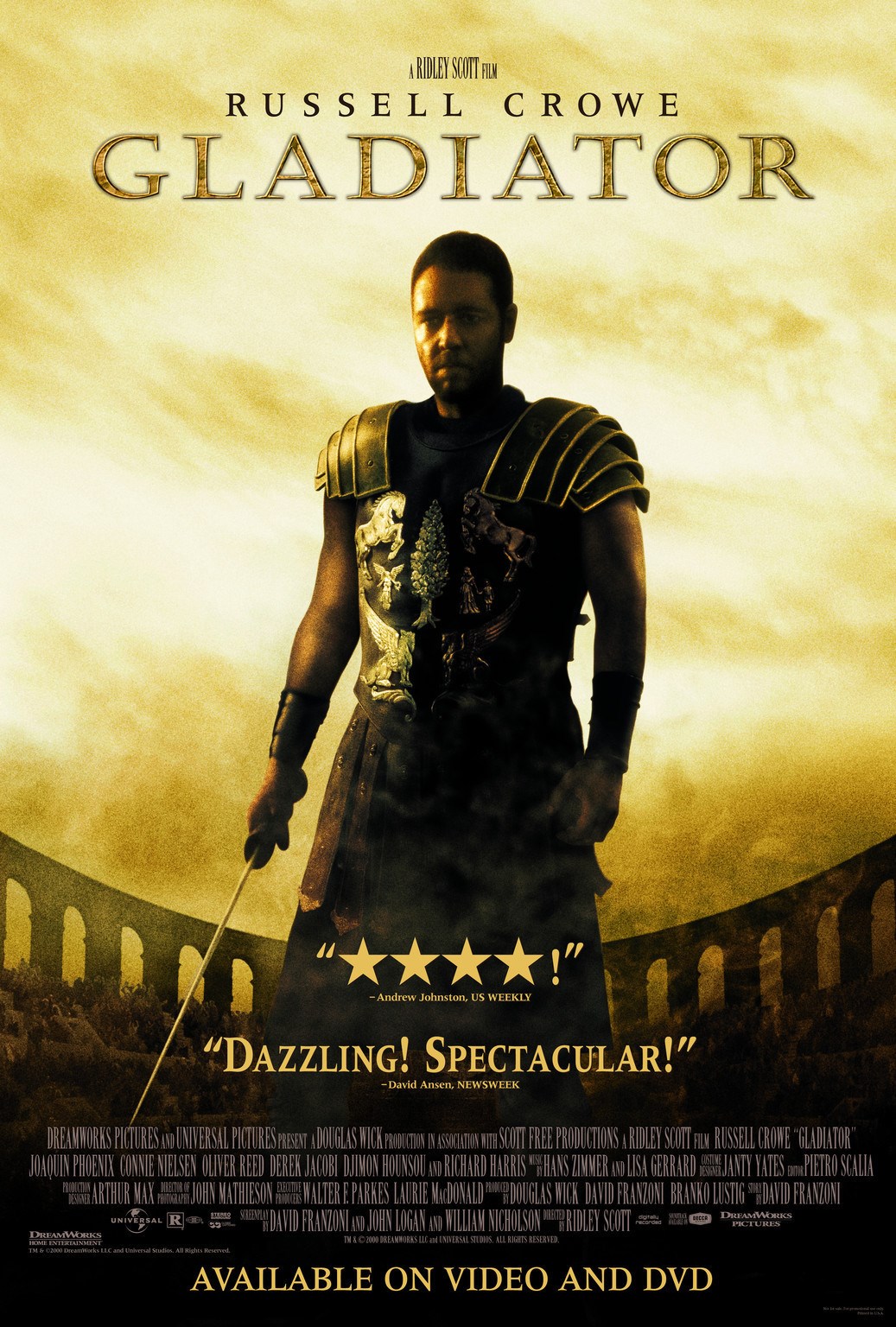
Image result for gladiator 2000
https://subscene.com/subtitles/gladiator/indonesian/824982

I recently watched the Ridley Scott film, Gladiator, starring Russel Crowe and I wanted to discuss some of my thoughts regarding its historical accuracy.  Enjoy!

The Romans have been studied for over the past millennia, due to their history of conquest, bloody games, and political struggle. This idea of the fearsome Romans have become a recent interest to the general public, especially movie productions. They have made countless movies; however, sometimes the productions diverge from the truth of what the Romans actually accomplished. Due to this, many inaccuracies have been found in these recent films. The 2000 film, Gladiator, is largely inaccurate based on its portrayal of Commodus, Marcus Aurelius, and the beginning battle in the Germanic lands.

Commodus was a real emperor who ruled the empire from 180 AD to 191 AD. However, his portrayal is completely inaccurate based on his appearance in the Colosseum, his relationship with his sister, and his eventual death. First, in the movie, Commodus fights in a duel with Maximus in the Colosseum. He is dressed in white armor that has a secret compartment where he stores an extra dagger to help him in case he loses his sword. This is inaccurate because Commodus believed that he was the incarnate of Hercules, the famous Greek hero (see Picture 1); while he did fight in the Colosseum, he dressed up as Hercules, with no other compartments. Second, the movie shows him have a particular love interest in his sister, Lucilla. This is also inaccurate because Commodus had his own wife, who was not his sister. More importantly, when he was the target of an assassination plot which Lucilla was a part of, he exiled and eventually killed her for treason. Finally, the movie depicts Commodus’ death as a result of Maximus stabbing him in the neck in the middle of the Colosseum. The truth is that Commodus was killed through an assassination plot, involving a gladiator strangling Commodus while taking a bath. Commodus is badly portrayed in the movie because the character does not relate himself to Hercules, has a sexual desire for his sister, and has a violent death in the Colosseum.

Marcus Aurelius is Commodus’ father and is known as the last of the Five Good Emperors in Roman History who ruled from 121 AD to 180 AD. However, he is also inaccurately portrayed based on his untimely death, and his choice for a legitimate heir to the leadership of the Roman Empire. The movie shows Marcus Aurelius’ death at the hands of Commodus, due to Aurelius’ refusal to make his son the legitimate heir to become emperor. First, Marcus Aurelius willingly made Commodus his legitimate heir to the throne. By making Commodus his co-emperor (where his son would rule with him until his death), he has officially made Commodus his heir. Second, historians do not know much about Marcus Aurelius’ death, although many suggest he died by a plague, rather than a brutal assassination. Marcus Aurelius’ character is inaccurately portrayed because he actually willing to give Commodus the inheritance to the emperorship, and his death is largely unknown by most.

Finally, the movie’s depiction of the beginning battle in the Germanic lands is another inaccuracy because of the improper weapons used in the battle, such as the use of catapults and fire-tipped arrows. The movie showed the Romans in a scene fighting an army of barbaric Germanic warriors, fighting in a standard battlefield. They used catapults to shoot projectiles that were lit on fire, and they used many fire-tipped arrows. Romans did use catapults in war; however, they were used only in sieges when it was necessary to have a way to break down the defense walls. The use of catapults in a limited space where there weren’t any walls to break, was possibly another way for the movie productions to increase the intensity of the battle. The movie also added fire-tipped arrows into the scene, where a huge horde of Roman soldiers shot them at the enemy. However, the Romans were not known for any use of fire-tipped arrows. There aren’t any sources that tell historians that they were in use. It is possible that the movie production put the fire-tipped arrows to make the scene more intense for the viewers. The Roman battle techniques differed from what the movie displayed because of the improper use of catapults in battle, and the unlikely usage of fire-tipped arrows in the Roman military.

In conclusion, Ridley Scott’s 2000 film, Gladiator, is largely inaccurate because of the portrayal of Commodus, Marcus Aurelius, and the battle in the Germanic lands. Commodus’ character in the movie doesn’t wear a Hercules outfit in the arena, has sexual feelings for his sister, and dies a bloody death in the Colosseum. However, Commodus believed himself to be the incarnate of Hercules (whom he fought as when participating in the violent games), he was already married and killed his sister, and he was strangled by a gladiator by surprise. The movie shows Marcus Aurelius’ character unwilling to make Commodus his own heir, and due to this, he was killed by Commodus. Actually, Marcus Aurelius made Commodus his co-emperor (which officially made Commodus his heir), and Marcus Aurelius’ death is largely unknown (although most think it was disease). Finally, the opening scene in the movie depicts the use of catapults and flame-tipped arrows. In truth, catapults were used only in sieges, and flame-tipped arrows were not recorded to be used by the Romans. While the Roman Empire fell many years ago, their stories have become popular today, through the production of many movies. However, it is important to remember that sometimes, fact and fiction differ and it is necessary to identify which is which.


Work Cited:


Primary Sources:

“Commodus.” RIC Volume III - Commodus (180-192 AD), Beast Coins, www.beastcoins.com/RomanImperial/III/Commodus/Commodus.htm. Accessed 16 July 2017.

“Life of Commodus.” Historia Augusta, University of Chicago, penelope.uchicago.edu/Thayer/e/roman/texts/historia_augusta/commodus*.html. Accessed 16 July 2017.


Secondary Sources:

“Commodus.” Commodus, www.tribunesandtriumphs.org/roman-emperors/commodus.htm. Accessed 16 July 2017.

“'Marcus Aurelius' Marcus Annius Verus (AD 121 - AD 180).” 'Marcus Aurelius' Marcus Annius Verus (AD 121 - AD 180), Roman-Empire.net, www.roman-empire.net/highpoint/marcaurelius.html. Accessed 16 July 2017.

O'Neill, Tim. “Is the Roman Legion Fighting the Germanic Tribes in Germania Accurately Portrayed in the Beginning of the Film Gladiator?” Quora, Quora.com, 26 Apr. 2016, www.quora.com/Is-the-Roman-legion-fighting-the-Germanic-tribes-in-Germania-accurately-portrayed-in-the-beginning-of-the-film-Gladiator. Accessed 16 July 2017.

Scott, Ridley, director. Gladiator (Motion Picture: 2000). IMDb, 2000.

Whittemore, Jessica, director. The Five Good Emperors of Rome & the Nervan-Antonine Dynasty. Study.com, study.com/academy/lesson/the-five-good-emperors-of-rome-the-nervan-antonine-dynasty.html. Accessed 16 July 2017.


Saturday, August 5, 2017

Augustus by John Williams


I have been reading the book, Augustus, by John Williams.  It is a fictional epistolary novel that tells the story of how a mere boy named Octavian grew up to become one of the greatest men in all of history, Augustus.

One of Augutus' earliest desicions to make is to decide who is a friend and who is a foe.  Not only does this play a role throughout the entire novel, but it plays a pivotal role when one of his friends, Salvidienus Rufus, betrays Octavian. Octavian is left no choice but to call Rufus a traitor to Rome and fire him from an official position.  Quintus Salvidienus Rufus dies by committing suicide in front of a messenger, who gives him a letter from Octavius Caesar to tell him that Rufus is no longer a general in Octavius’ army.  It struck me to see how the entire scene occurred.  When Octavius, Mark Antony, and Maecenas are discussing who is a friend to their cause (and who is not), Octavius declares that he wants to make Salvidienus a consul.  Antony reveals a letter to Octavius, where Salvidienus declares his allegiance to Antony and calls Octavian an outlaw.  Due to this Octavius decides to remove him from his military campaign.  When Salvidienus receives the news, he is heartbroken that his childhood friend removes him from his honorable job and rejects him as a friend, and thus, he commits suicide.

In the novel, one of the most controversial characters is Augustus' daughter Julia.  Julia was known to be a bit promiscuous, as has many lovers throughout the novel.  Despite this, many defend her actions as her husbands were merely political marriages to men at least twenty or thirty years older than she. After many years of her affairs, Augustus exiles Julia from Rome due to her adulterous behavior and a plot against Tiberius’ and his life.  Augustus knows that Julia has been unfaithful to her third husband, Tiberius and she has had many lovers.  Later, a plot is revealed that certain men (who all were lovers of Julia) are planning to kill Tiberius, and if a success, kill Augustus as well.  It is not clear whether Julia knew of the conspiracy or not, but Augustus tells her that because of her known unhappiness with Tiberius and her love affairs with the conspirators, the odds do not look in her favor of innocence.  Therefore, in order to spare her life from execution (due to her treason), Augustus exiles her from the city of Rome.  This scene speaks to me because Augustus is forced to make a decision that he knows is for the best, but still will hurt her more than it will him.  Also. the scene shows that Julia has two personalities: one as the daughter of the Emperor which shows her devotion to Rome and to her father, and another as a sort of a party-girl (for a lack of a better word) which shows her devotion to live her life even if it means doing the wrong thing.

I feel that Augustus' love for Julia plays an important role in his decision to exile her as this is arguable one of the hardest decsions he has ever made.  He has fought in many battles, and yet when it comes to family, this is one he knows that there wont be any positive outcome.  Octavius’ relationship with Julia was strong at first.  He cherished and loved her, and even called her his “Little Rome”.  She loved him as well, and often clung to him.  Then, Octavius used Julia by marrying her to his allies, as a way of cementing political alliances.  This began the deterioration of the relationship between the two.  After marrying to Tiberius, Julia began to have affairs with many men.  Not only did this taint her father’s public image, but his willingness to overlook her actions made him seem weak-willed, further stretching the relationship.  After discovering that Julia was possibly involved in a plot with her lovers to have Tiberius and Augustus killed, Augustus exiled her (which was a form of mercy from the death penalty).


One of the best parts about the novel is to see how Octavius changes throughout his life, as shown from Book 1 to Book 3.  He starts out as a weak-willed boy, who lacks the necessary skills to carry the reputation as the son of Caesar.  Julius Caesar even sends Octavius to a special camp to teach him about how to become a great general.  After Caesar’s death, Octavius learns how to speak for himself in front of the public.  He learns how to make alliances (with Mark Antony and Lepidus), in order to stand up to the Senate.  Thus, he becomes more independent, especially after fighting the other two triumvirs over Rome.  He makes his own laws and learns how to give the people what they want, and avoid political unrest.

Titles played a role in the novel because they were used back in ancient times as a way of declaring a person’s importance or personality.  For example, Augustus’ true name is Imperator Caesar Divi Filius Augustus, Pater Patriae.  Having Caesar incorporated to his name glorifies his ancestry of being a direct descendent of Julius Caesar.  Also, Caesar was deified, which enhanced Augustus’ power.  Even the name “Augustus” means “worthy of honor”.  This title was given to him after defeating Mark Antony and Cleopatra, becoming the first emperor.  Certain titles were given to declare a certain position.  For example, Lepidus was given the title “Pontifex Maxiumus” which meant that he was head of all of the priests.  In fact, before being exiled, that title was the only one not stripped from him.

The epistolary form helps contribute to the novel because it shows the character’s point of view.  For example, Julia’s diary explains to the reader that she truly hated Tiberius, and she respected Livia, who was not fond of Julia.  Nicolaus’ letters give a perspective of a Jew living in Rome, and how he portrayed Cleopatra as a wise ruler, instead of the lover of Antony.  The letters also give the reader access to certain political strategies, such as Tiberius’ letters from his advisors telling him to leave the city after receiving a consulship, or to announce the plot against his life.  It provides insight into what people think as they remember past events, such as Augustus’ nostalgia of living in all of his past glory.

Being myself a Jew, it is rare to see great Jewish people (especially in ancient history) play a role in the affairs of the great leaders of history.  However, when there is one, it is interesting bhow their religion plays into their success.

“Perhaps it is because I am nominally a Jew yet a philosopher and no fanatic, and because my father has some small business connection with the court of King Herod…” (112)

I chose this excerpt because it is quite rare to see the point-of-view of a Jew in Roman times.  Nicolaus of Damascus is a Roman Jew who has seen the inner politics of the empire personally.  In this letter, he writes to Strabo and describes his position as the private tutor for Cleopatra’s children, and is quite confused about why he got the job (he thinks it has to do with his religion and his philosophical skills). This excerpt supports the central theme of different points-of-view.  Even though Nicolaus is not a devote Jew, he still identifies himself as one and therefore, he is part of a minority.  History is written primarily by the dominant group of an area, but very rarely is history written by someone who is not exactly part of said majority.  The fact that Nicolaus is a Jew says a lot about how his religion plays a part in the daily life of a Roman, in this case Cleopatra (and eventually, Augustus).  It is also noted that a Jew could rise in the social and economic status of the Roman society.  He claims that he gains support due to his father’s financial connection to King Herod.

Saturday, July 22, 2017

An Iliad by Alessandro Baricco


This summer I have been reading many books, one of which is An Iliad by Alessandro Baricco.  This book is a retelling of the Iliad, which is an epic poem about the Trojan War.  However, Baricco retells it through the perspective of the heroes and mortals, without mentioning any roles that the gods themselves played.  These are some of my thoughts about it.  Enjoy!

The first words of the actual epic poem are "the wrath of Achilles".  Achilles wrath comes from his immense anger.  Achilles is angry with Agamemnon, because his concubine, Briseis, is taken away
from him. First, Achilles was in love with Briseis and desires her more than any of his other concubines. To have her taken away by Agamemnon is very insulting to him. Second, he views Agamemnon as an arrogant general, who can simply take what he wants, even if he does not deserve it. Just because he had to give his concubine up does not give him the right to take what was given to someone else, especially if he takes it away from the man who won the battle in the first place. Finally, Achilles feels that Agamemnon has dishonored him. If his honor can be ruined by a man who is not nearly as a great of a warrior as he is, then there is no glory for him in the war, where he can find warriors who are equal to him. Thus, he withdraws himself from the war, until his honor has been restored. Agamemnon is simply angry that Achilles will not take orders from him, as he is older, wiser, and wealthier. He is the leader of the Greek forces, and Achilles is simply just a general. Also, he believes that since he is the leader, he should have the right to take what he wants, even from his own men, who should be more than willing to do so (as a sign of loyalty).

One of the most hated characters in the epic story is Paris, the prince of Troy who steals the wife of the king of Sparta.  Baricco omits Paris’ narrative in his book, largely due to Paris’ lack of heroism. First, he is responsible for starting the entire war in the first place. He stole a woman from a man, who is older, wiser, and has a higher social ranking than Paris himself. He violated the common law of Xenia, where guests should be fair to their hosts and vice-versa. Paris is also a mere boy who lacks courage. He steals Helen, when Menelaus is away (instead of confronting the King of Sparta). While hundreds of soldiers are dying for a war that they have no particular interest in, Paris is often found in his room, not in the battlefield where he should be. Therefore, Paris lacks character and heroism to be a central figure in Barrico’s An Iliad.

Baricco's book is unique because he has a list of different narrators who each tell different perspectives of different parts of the story.  In my opinion, it is effective to tell the story through a variety of narrators. This allows the reader to gain a variety of points of views. First, it allows us to find out what the heroes were thinking before a major event. Was Patroclus scared before he went into battle? Did Hector ever give up on his men? Also, it provides insight into what the minor characters were thinking, such as Helen’s maid. Everyone hears the story about the great heroes such as Achilles, Hector, and Aeneas. But, no one hears it from the point of view of a simple Trojan maid, who sees the action occur in front of her. Finally, it connects to the ideas of personification of natural elements. The Greeks believed that the rivers, trees, and oceans where just as alive as humans are. It is interesting, for example, to hear what a river has to say about the war. It touches what the Greeks believed, and makes the aura of the story more appropriate in regards to the setting of time and common belief.

Obviously, the story of the Trojan War includes certain aspects about warfare, and how warfare is viewed by different people.  In my opinion, the story of Trojan War does not condemn war. In fact, it celebrates it. It is about how the Greeks fought against an enemy that dishonored the very principles of Greek society. Although it took ten years, it shows how valiant and loyal the Greeks were to accomplishing their goal of avenging the wrong put upon them by the ignorant Trojans. The first few words of the epic describe the wrath of Achilles, and what better way to tell the story of their victory than to start with the bloodthirstiness of their greatest warrior of all time. This is just enough to show how important war was to the Greeks. After all, the basic plot of the epic is entirely about a war. The story even has the gods interfering with the battle, killing mortals, or fighting other gods as well.

Along the topic of warfare, the story gives the reader a sense of what happens during war.  It hits on the ideas about glory and savagery, and how family plays into it.  In An Iliad, Baricco portrays his characters to value military glory more than family.  One example of this is Hector. He has a wife, Andromache, and a recently-born son, Astyanax. Even though he loves them very much, he still finds it his duty to die for Troy. He wants to gain the glory of defeating the Greeks, just to save his city. Patroclus is another example. He is willing to leave Achilles, his best friend (and possible lover), just to fight on the battlefield, take down Hector, and be the hero of the Greeks. Achilles is the only one that he truly cares about, and they are as close as family. So, when Patroclus goes into battle, he leaves Achilles behind. Finally, there is Achilles. His mother, Thetis, knows that if Achilles goes in battle, he will surely die. So, she pleads that Achilles not enter the war. When Achilles decides to go fight, he leaves his family with a broken-hearted mother. He chooses eternal glory over his mother’s worries.

As stated earlier, glory plays an important role in warfare.  Many characters do things for glory, but those actions do not necessarily make them heroic.  When it comes to heroism, the most heroic character in the Iliad is Prince Hector. He is willing to give up everything he has, spending time with his wife and son, and his life, just to protect the inhabitants of Troy. He is often in the front lines, along with his men, to defend their land from the Greeks. Unlike his brother Paris, he is dedicated to serving his city, his honor, and the future of the people. He even accepts his fate that he will be killed by Achilles, just if it gives his troops enough time to go seek refuge back into the city. He knows he will die, yet he goes on to do the very best he can. Even when he is about to die, he asks Achilles to give his body back to his father, for Priam’s sake, not his.

Of the many parts of this amazing story, one quote and scene stood out to me:

“He raised his spear and hurled it. The bronze tip entered near the eye, went through the
white teeth, cut the tongue cleanly at the base, and came out of the neck. I fell from the chariot -
I, a hero - and the bright shining armor thundered down upon me. The last thing I recall is the
swift, terrible horses as they swerved in panic. Then my strength abandoned me, and, with it, my
life.” (p. 35)

I like this except because it describes a first person narrative of someone who is being killed at that moment. In this case, it is Pandarus, a Trojan archer (who is responsible for ending the truce by shooting Menelaus with the intent of killing him). He is on a chariot shooting down Greek soldiers, with Aeneas driving the chariot. Suddenly, Diomedes approaches, and begins to kill many Trojans. Pandarus attempts to shoot him, and although he wounds him, the arrow has not killed him. In return, Diomedes throws his spear that goes through Pandarus’ head and kills him.  As stated before, Pandarus describes his death in a first-person narrative. Usually, deaths are told in the third person, which makes this case a bit more interesting. Also, he describes the actual places where he was wounded and his fall to the ground with the weight of the armor, which adds detail and imagery to the scene. This excerpt provides a thematic view about the soul and its separation from the body after death. This was a key belief for the Greeks, and is especially present in An Iliad.  Soldiers do not often pray for survival of a battle, but a glorious death and (more importantly) a pleasant afterlife. Pandarus’ death was one of the hundreds who were killed, and each prayed for a wonderful afterlife.

Saturday, June 24, 2017

Ascanius Classical Promise Scholarship


The Ascanius Youth Classics Institute is an organization dedicated to advancing the knowledge of the Classical world, and they offer the Classical Promise Scholarships to students who have an interest in creating a program that works with elementary or middle school students. 

For more about The Ascanius Youth Classics Institute, go to:

A little while ago, I applied for the Classical Promise Scholarship and I proposed my own project, The Hermes Project.  I was just informed by Ascanius that I won the scholarship!!!  I am so excited about starting this new project!!!


Saturday, June 3, 2017

The Hermes Project

                                              Image result for Hermes Greek God Mercury

https://blog.johnrchildress.com/2012/09/19/a-fable-of-hermes-and-a-modern-day-moral-for-wall-street/

 As you have probably gathered, I love the Classics! I have been studying it for almost four years, and it continues to amaze me whenever I learn about a new hero, a new story, a new dilemma. What is probably a bit more difficult thing to tell about me is that I am what you would call, a story-teller. I enjoy stories. History and Mythology are sources of amazing stories about human nature, and involve heroes (real or fiction), amazing plots, and dramatic sensations. More importantly, I love telling stories to my peers about what has happened to famous people, and how they have earned their legacy. The beauty of story-telling is that you have the opportunity to bring your audience to a different world, where the exotic lifestyle and people are so fascinating. And yet, there is still knowledge to be gained. From a far standpoint, these stories have nothing to do with our lives today in the 21st Century. We have our smart phones, television, and our social media. However, the closer you look, you will see how much you have in common with the ancient heroes of great. Human nature is anything but unstable. It is constant, and thus, our challenges and lifestyles can be quite as enjoyable, scary, and awesome as the ones in the past. These stories provide guidance into our world, and it feels great to pass on knowledge to many, just as our ancestors did in the past. The Classics have a bad reputation to be unusable and unrelated to today’s world, and I beg to differ, and to change that, I tell the stories of Heracles, Alexander the Great, and Augustus Caesar. My world is that of the legends (both real and fictional), which is unfortunately not a world that most people see at all. The only ones who still live in it are children, who love to hear stories over and over again. I would like to share my passion of story-telling with younger kids. Stories are a child's medicine and I wish to provide kids with the knowledge that has changed my life (and hopefully, theirs as well).

To this end, I want to create a program that helps kids explore the world of the Classics; from its wide history, to the amazing stories that have survived for so long. I will call it The Hermes Project. Now, if you are unfamiliar with the name Hermes, I will tell you. Hermes is the god of messages, travel, trickery, and much more. Hermes's most famous job is to take souls to the underworld (which is basically the afterlife). My goal is to be like Hermes, to take my audience to a different realm where legends come alive. Hermes is also known for being very tricky and cunning. After all, he tried to steal his brother's cattle the day after he was born, and when his brother asked him if he stole the cattle, he simply replied "How could I steal the cattle, I'm just a little baby." One thing that I have learned about during my studies of the Classics was how to use different strategies to one's own advantage to achieve success. Now, I'm not saying that the kids will be stealing each other's plush cows, but I want them to learn about how important one's words are, ones' actions, and how they make a difference in a way one lives their life.

The project will consist of 45-60 minutes sessions. Each session will include story-telling and an arts and crafts project. For each session, I will be preparing a lesson with the goal of teaching different aspects of the Classics (i.e. Mythology and History). For example, I could teach about the Persian Wars, where the Greek city-states, who were often rivals, joined forces to drive out the invading Persians. This teaches that while you may not need to agree with others, it is best to befriend others in order to rely and trust each other. Or, I can talk about Marcus Aurelius, a Roman Emperor who wrote a book, Meditations, about how to live life in the pursuit of happiness, and maybe the kids will enjoy hearing what someone from the past has to offer them. Afterwards, I will help the kids in making some sort of art project that relates to the subject of the story. For Marcus Aurelius, the kids can write a few of their ideas down on paper and make a mini-book for them to carry home or anywhere else. For the Persian Wars, I could create a cardboard template, where the kids can cut out, and make their own Greek masks, in order to create a room full of kids who will all be the same (since they are wearing the same thing), and therefore won’t be able to see any differences or look down upon other kids in the room.

My aim is to give back something that I have found and treasured for years, and what better way to do that than give my knowledge to our future: kids.  I hope that the kids can take a lot from these experiences, as I have done over the past four exciting years of my life.

Saturday, May 20, 2017

My lecture on Greece n' Rome


I have been taught to always give, and in order to repay for my favorite teacher's generosity (of teaching experiences and gifts) I decided to create history videos to prepare my peers for the World History 10th Grade Final Exam.  This is one of three videos that I will make.  I truly hope you all can enjoy this video as much as I had making it!

Best, Pertinax Recimer Germnicus Audax Superbus Maxiumus (that's me)